
Construction guide
Closing Out Greater Houston Construction Projects
A practical guide to organizing punch lists, record documents, owner training, turnover milestones, and final administrative closeout on Greater Houston projects.

Construction closeout often begins too late. A project can look nearly finished in the field while the owner still lacks record documents, equipment information, training, resolved punch-list items, final approvals, or a clear distinction between physical completion and administrative closeout. When those tasks are compressed into the last days of a project, small missing items can delay turnover or leave the owner sorting through incomplete information after occupancy.
For Greater Houston owners and developers, closeout works better when it is treated as a planned phase of the project rather than an afterthought. The work should begin while construction is still active, with responsibilities assigned for documentation, inspections, training, outstanding corrections, and final commercial reconciliation.
Federal project-management guidance from the U.S. General Services Administration provides a useful reference point. GSA’s closeout materials identify project records such as as-builts and invoices as part of completion documentation and distinguish physical completion from later financial closeout. Those requirements apply to GSA programs, not automatically to private Houston projects. The broader planning lesson is that field completion, owner readiness, documentation, and financial closure are related but separate workstreams.
Define closeout deliverables before the final month
A practical closeout plan begins with a list of required deliverables and the party responsible for each one. Depending on the project, that list may include punch-list completion, record drawings, operation and maintenance information, warranties, spare materials, keys and access credentials, equipment startup records, test reports, owner training, inspection records, permits or approvals, lien or payment documentation, and final photographs.
The exact list should come from the contract documents and the requirements that apply to the project. Owners should resist using a generic checklist without comparing it to the actual specifications, consultant requirements, lender conditions, and operating needs.
The earlier the list is created, the easier it is to collect information as the work progresses. For example, a subcontractor may leave the site months before final turnover. If its warranty, equipment data, testing records, or record markups are not collected before demobilization, the project team may spend closeout chasing information from a company that no longer has personnel on site.
A useful owner-level control is a closeout register that tracks each deliverable, responsible party, due date, review status, and final location. This is analysis and project-control advice, not a requirement from the cited GSA sources, but it reflects the same principle of making completion records visible rather than waiting until the end.

Separate substantial completion from final completion
One of the most important closeout distinctions is the difference between a building being usable and every contractual or administrative item being finished. Terminology varies by contract, so owners should follow the definitions in their own agreements. The general planning point is to avoid treating one milestone as if it closes every open item.
GSA’s RWA guidance explicitly distinguishes completion from closeout in its own program. It describes completion as the point when a project is physically and substantially complete and the customer can take beneficial occupancy, while closeout concerns the financial readiness needed to close the project. Private construction contracts may use different language, but the distinction illustrates why owners should map multiple end-stage milestones.
A Greater Houston project may have a usable space while corrective work, documentation, training, final billing, or other contractual obligations remain outstanding. If the owner expects all of those activities to happen on the same date, the schedule may hide weeks of real closeout effort.
The better approach is to identify milestone logic early. Which conditions allow owner use? Which items must be complete before a formal inspection or acceptance step? Which documents are due at turnover? Which financial activities follow later? Who decides that an outstanding item is resolved? Writing those answers into the closeout plan makes the end of the project easier to manage.
Make the punch list a controlled process
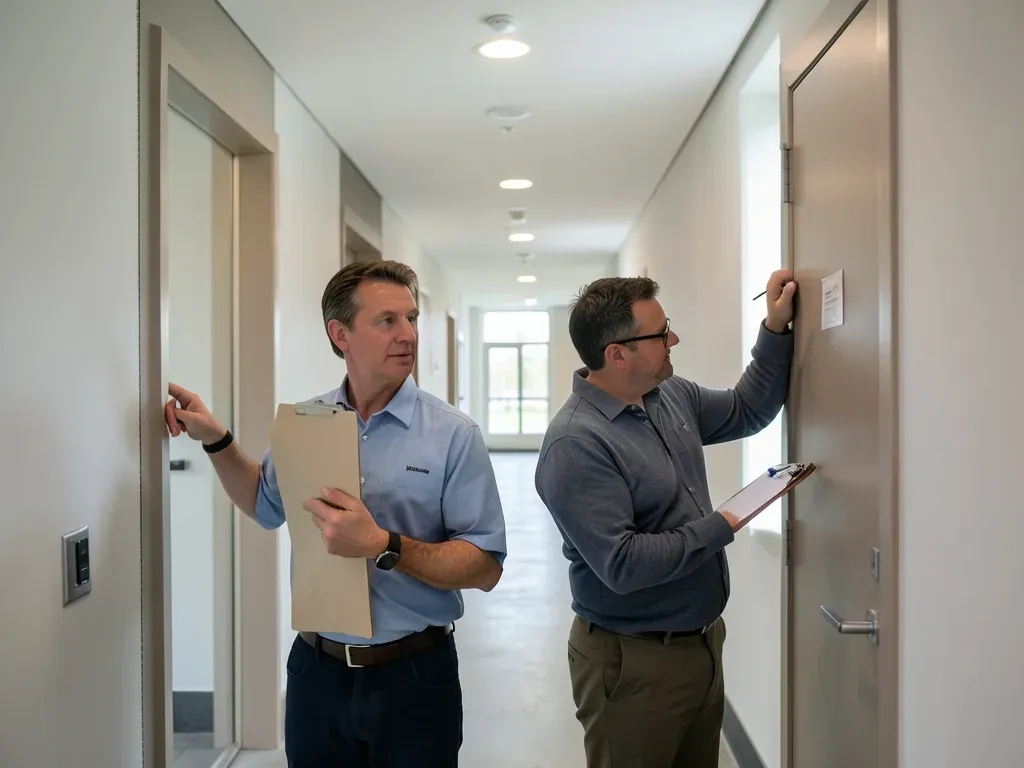
A punch list is most useful when it confirms a nearly complete project, not when it becomes the first comprehensive quality review. Teams can reduce the final list by performing area-by-area checks as spaces approach completion and by correcting repetitive issues before they spread across the project.
Owners should also define how punch items are recorded and verified. A clear item should identify the location, the issue, the responsible party, and the status. Photographs can help when they add useful context. Closing an item should mean that the correction was checked, not merely that someone reported it finished.
The sequence matters. If punch work continues after final cleaning, furniture installation, or owner move-in, each return visit can create access conflicts or new damage. A staged plan might move through trade quality checks, contractor review, design-team or owner review as applicable, correction, verification, final cleaning, and turnover. The exact sequence depends on the contract and project type.
For larger projects, owners can also track recurring categories. If the same hardware adjustment, finish defect, labeling issue, or ceiling coordination problem appears repeatedly, the team should address the underlying process instead of adding dozens of identical items to the final list.
Build record documents while work is still visible
Record information is much easier to maintain during construction than to reconstruct after ceilings are closed and crews have demobilized. The project team should define who maintains field markups, how often they are updated, what format is required at turnover, and how changes from approved documents are incorporated.
GSA’s delegated-project closeout guidance specifically calls for project files such as as-builts and other closeout documents to be uploaded before the project workflow is completed. Again, that procedure is specific to GSA, but it reinforces a broadly useful owner practice: final records should be a required project deliverable with a defined location and review process.
For owners, record documents are operational tools. Maintenance teams may rely on them to locate valves, access panels, equipment connections, or concealed systems. Future renovation teams may use them to understand what changed during construction. Incomplete records can turn a simple future repair into investigation work.
A strong closeout plan therefore includes periodic record-document checks. The goal is not to wait for a perfect final package; it is to keep the information current enough that the final compilation is a review task rather than a reconstruction exercise.
Schedule owner training and turnover by system
Owner training is another task that often gets crowded into the final week. A better plan identifies the systems that require instruction, the people who need to attend, the prerequisites for useful training, and the records that should be provided.
Training before a system is operational may be too abstract. Training after key contractor personnel have left may be difficult to reschedule. The project team can avoid that gap by tying training to commissioning, startup, testing, and turnover milestones.
For a commercial or multifamily owner, different audiences may need different information. Facility staff may need detailed operating and maintenance instruction. Property management may need access-control, warranty, or service-contact information. The owner’s representative may need a summary of open issues and the location of final records. Training can be organized around those actual responsibilities rather than delivered as one large session with mixed relevance.
Owners should also decide how training is documented. Attendance records, agendas, manufacturer materials, recordings where appropriate, and open follow-up questions can all help the operating team after turnover.

Keep administrative closeout visible after turnover
Physical turnover can create a false sense that the project is finished. Final invoices, change reconciliation, retained amounts, claims, warranties, final documents, and other contractual matters may continue afterward. GSA’s RWA guidance makes this distinction explicit in its own process by separating physical completion from financial closeout.
Private owners can use the same conceptual separation without copying the federal procedure. Maintain a short post-turnover closeout schedule that identifies remaining commercial and documentation items, responsible parties, and target dates. This keeps unresolved work from disappearing once the project team shifts attention to the next job.
The owner should also confirm where the final archive will live. Closeout files are more useful when future staff can find them. A consistent folder structure, final index, and clear naming convention can be more valuable than a large collection of unorganized files.
Treat closeout as part of preconstruction
The most effective closeout decisions are often made near the beginning of the project. Contract language establishes deliverables. Submittal requirements determine what product information is collected. Schedule logic determines when training and inspections occur. Document-control practices determine whether records are current. Procurement decisions determine which vendors will later provide warranties and service information.
For Greater Houston owners, the practical closeout questions are straightforward: What must be delivered? Who owns each item? When is it due? What milestone does it support? Who reviews it? Where will the final record live?
GSA’s current project-management guidance shows that completion records and financial closure are treated as defined process steps rather than informal cleanup. The broader lesson for private work is the same: closeout should be planned, tracked, and resourced. Doing that early can help the owner reach turnover with fewer unresolved questions and a more usable record of the finished project.