
Industry analysis
Houston Healthcare Construction: New Capacity Signals
Recent rehabilitation and hospital projects show how Greater Houston healthcare construction is balancing new capacity, active-campus continuity, and phased delivery.
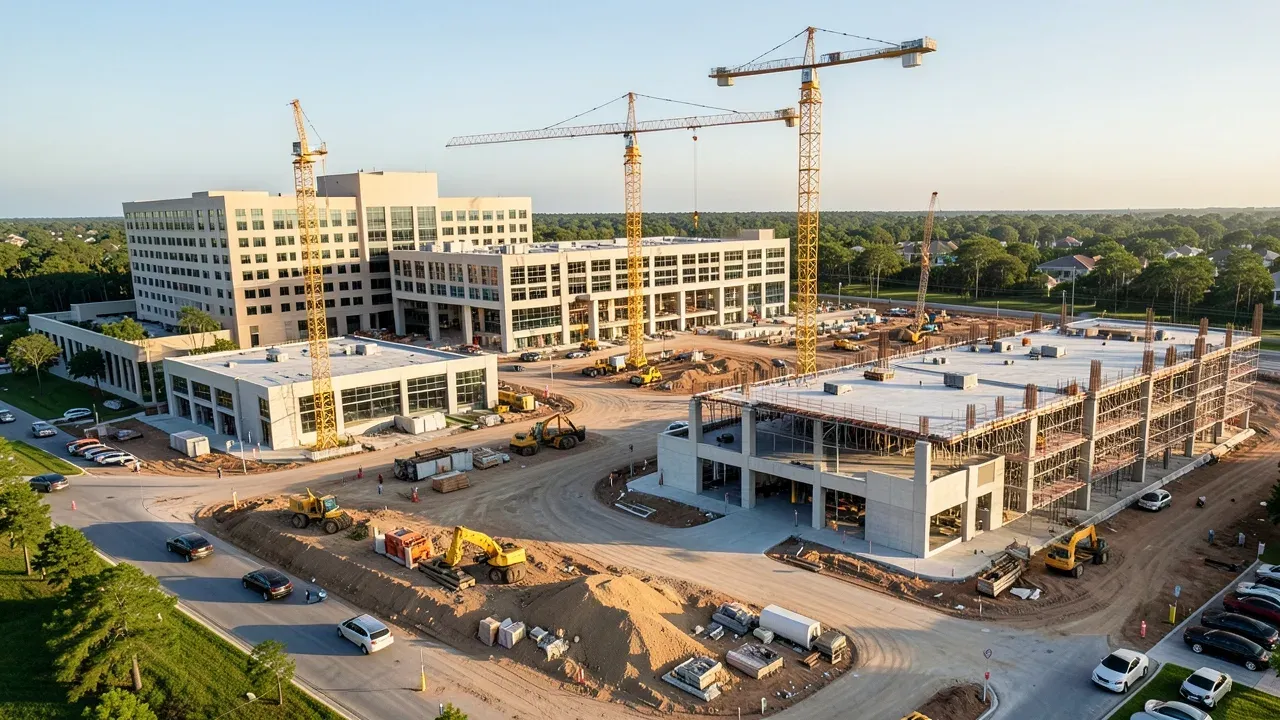
Greater Houston’s healthcare construction pipeline is showing several kinds of capacity growth at once. Recent announcements and project updates include a smaller-format inpatient rehabilitation facility planned for Conroe, a replacement rehabilitation hospital planned in The Woodlands, a completed bed expansion in Katy, and continued progress on Harris Health’s new Lyndon B. Johnson Hospital campus.
These are different projects with different owners, scopes, schedules, and delivery conditions. They should not be combined into a single forecast for the region. Taken together, however, they illustrate practical planning themes that matter to owners and developers considering healthcare work: how to phase construction around active operations, how to scale capacity in different formats, how utility and specialty systems can shape the critical path, and why turnover planning needs to start well before opening.
The sourced facts below describe announced or reported projects. The owner-focused implications are analysis, not predictions about the performance, cost, or schedule of any specific project.
New capacity is arriving in more than one format
On September 24, Encompass Health announced two Montgomery County projects: a 24-bed inpatient rehabilitation hospital planned for Conroe and a replacement hospital planned for its existing Woodlands campus. The company described the Conroe facility as its first small-format inpatient rehabilitation hospital and said it is expected to begin serving patients in late 2027. It also described a planned 60-bed replacement hospital in The Woodlands, expected in 2029, with construction intended to allow the existing hospital to continue serving patients.
The Houston Chronicle reported the same expansion on September 29 and highlighted the contrast between the smaller Conroe facility and the larger replacement hospital. That contrast matters because healthcare capacity does not always arrive through one large greenfield prototype. Owners may evaluate satellite facilities, additions, replacements, or phased campus investments depending on demand, site constraints, capital strategy, and operating needs.
For Greater Houston developers, the planning implication is to define the operating model before the building model. A smaller facility may reduce gross area, but it still requires healthcare-specific infrastructure, patient circulation, support space, life-safety coordination, and a clear path to licensing and occupancy. A replacement campus can offer more room for modernization but may create a much more complex interface with existing operations.
Active-campus continuity becomes a construction constraint
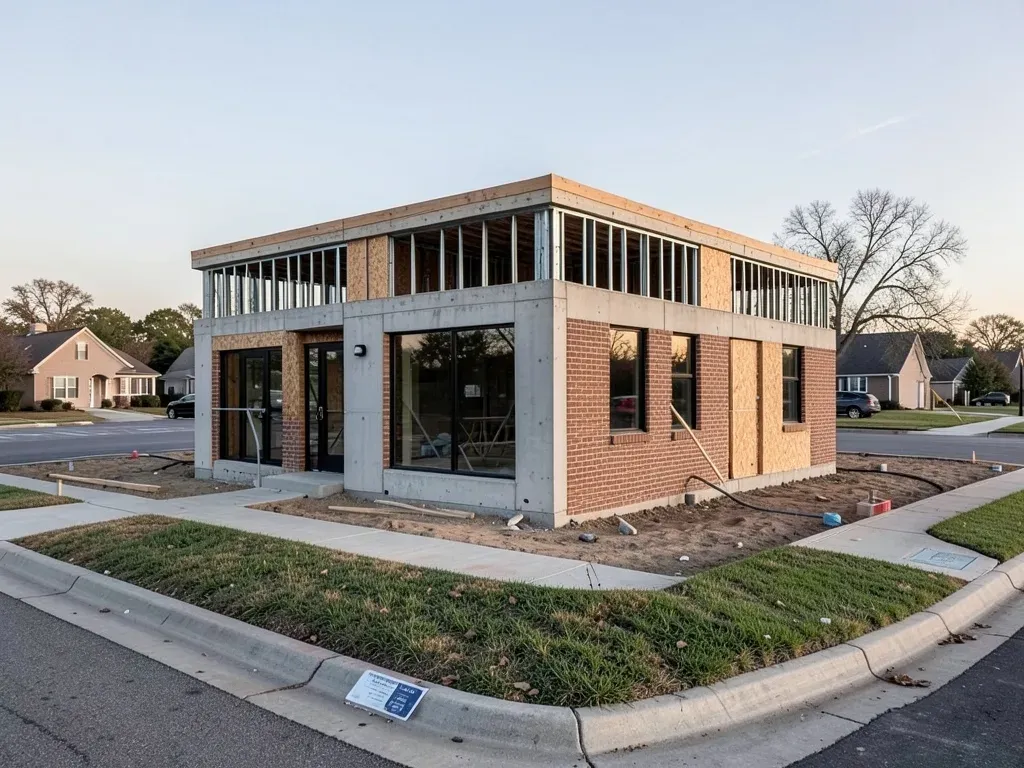
The Woodlands replacement announcement is notable because Encompass said the existing hospital is expected to continue serving patients while the new facility is built. Harris Health’s large new hospital campus also demonstrates the scale and system complexity of healthcare delivery in the region, although it is a different type of project. In April, Harris Health reported that the new John M. O’Quinn Hospital structure at the Lyndon B. Johnson campus had reached a completion milestone, with major mechanical, electrical, and plumbing work progressing.
Those source facts point to an important owner issue: when construction occurs next to operating healthcare functions, continuity requirements can shape logistics as strongly as the building design itself. Construction traffic, temporary access, shutdowns, noise, dust, vibration, utility tie-ins, emergency routes, staff circulation, and patient separation all need deliberate planning.
The practical response is to treat operational interfaces as schedule activities rather than general notes. A utility shutdown, for example, may require design review, redundancy confirmation, advance notice, temporary service, contingency planning, and a narrow execution window. A corridor closure may require temporary wayfinding and fire-life-safety coordination. Deliveries that would be routine on a greenfield project may need to avoid ambulance or patient traffic.
For owners, these interfaces should appear in early phasing documents and continue into the detailed schedule. If continuity constraints are discovered only after trade sequencing is set, the project may have fewer workable options.
Specialty systems and utilities deserve front-end attention
Healthcare buildings concentrate systems that must operate reliably together. Depending on the facility, those systems can include emergency power, medical gases, nurse call, low-voltage communications, security, building controls, specialized HVAC, fire protection, and clinical equipment connections. The exact requirements vary by project, so owners should avoid assuming that a smaller floor area automatically produces a simple building.
Recent Houston-area hospital projects reinforce the importance of this systems layer. Harris Health specifically identified progress on mechanical, electrical, and plumbing systems at its new campus. Encompass’s replacement-hospital plan also centers on delivering a new operating facility while the current one remains in service. Neither source establishes a universal schedule rule, but both illustrate why system coordination can become a project-defining activity.
Owners can respond by moving several questions forward: When are utility capacities confirmed? Which long-lead components depend on final design decisions? Which systems require third-party inspection, testing, certification, or owner training? Which tie-ins affect active operations? What temporary systems are needed during cutover?
A coordinated answer helps separate design completion from operational readiness. A room can look finished while controls, alarms, balancing, equipment integration, or documentation are still incomplete. For that reason, the turnover schedule should not be compressed into a single final milestone.
Existing facilities are also adding capacity
The regional signal is not limited to ground-up construction. In July, Encompass Health reported that its Katy rehabilitation hospital had completed an expansion adding 15 private patient rooms, bringing that facility to 75 beds. The company said construction had begun in January.
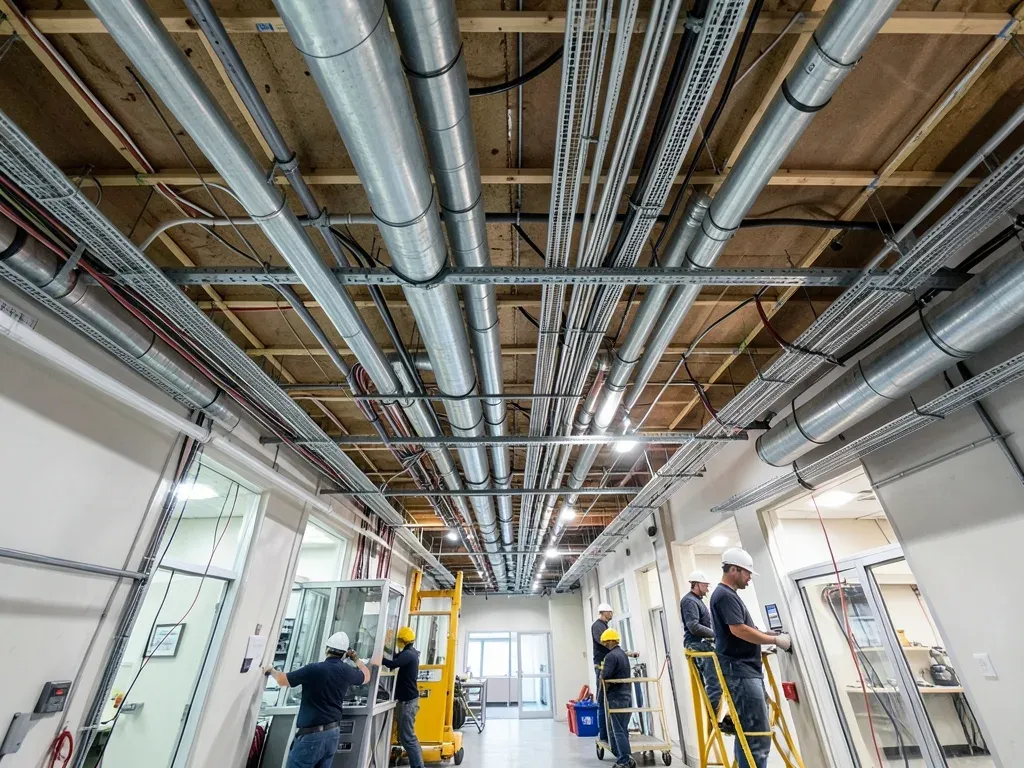
An expansion within an existing healthcare property creates a different risk profile from a new standalone building. The work may need to connect to existing utilities, match current systems, maintain egress, isolate construction, and sequence disruptive activities around ongoing operations. Existing conditions can also make field verification more important because record documents may not fully describe what crews encounter behind walls or above ceilings.
For Greater Houston owners, this is a reminder to distinguish expansion feasibility from simple square-foot growth. Before committing to a schedule, the project team should understand existing utility capacity, shutdown limitations, infection-control or environmental requirements that apply to the facility, temporary access, and the boundaries between contractor work and hospital operations.
That due diligence can also influence procurement. Specialty subcontractors may need to work in short windows or coordinate with facility personnel. Materials and equipment that affect a planned shutdown may need earlier release than their physical installation date suggests.
Phasing should connect capital decisions to opening readiness
A multi-project pipeline can tempt owners to focus first on construction starts. Healthcare projects often benefit from looking backward from the planned operational date instead. Opening readiness can involve inspections, life-safety testing, systems commissioning, staff training, equipment installation, technology integration, regulatory steps, and phased occupancy preparations.
The useful analytical signal from the current Houston-area projects is therefore not simply that “healthcare is growing.” It is that capacity is being added through several physical strategies: a compact new facility, a replacement hospital on an operating campus, an expansion of an existing hospital, and a major new public hospital campus. Each strategy places risk in a different part of the project.
A small-format facility may emphasize repeatability and disciplined scope. A replacement project may emphasize continuity and cutover. An addition may emphasize existing-condition coordination. A major new campus may put more weight on infrastructure, specialty systems, commissioning, and multi-year sequencing.
What Greater Houston owners should carry forward
Current announcements do not guarantee that every Houston healthcare project will advance, nor do they establish a regional price or schedule benchmark. They do provide useful evidence that owners are pursuing capacity through different facility types and project scales.
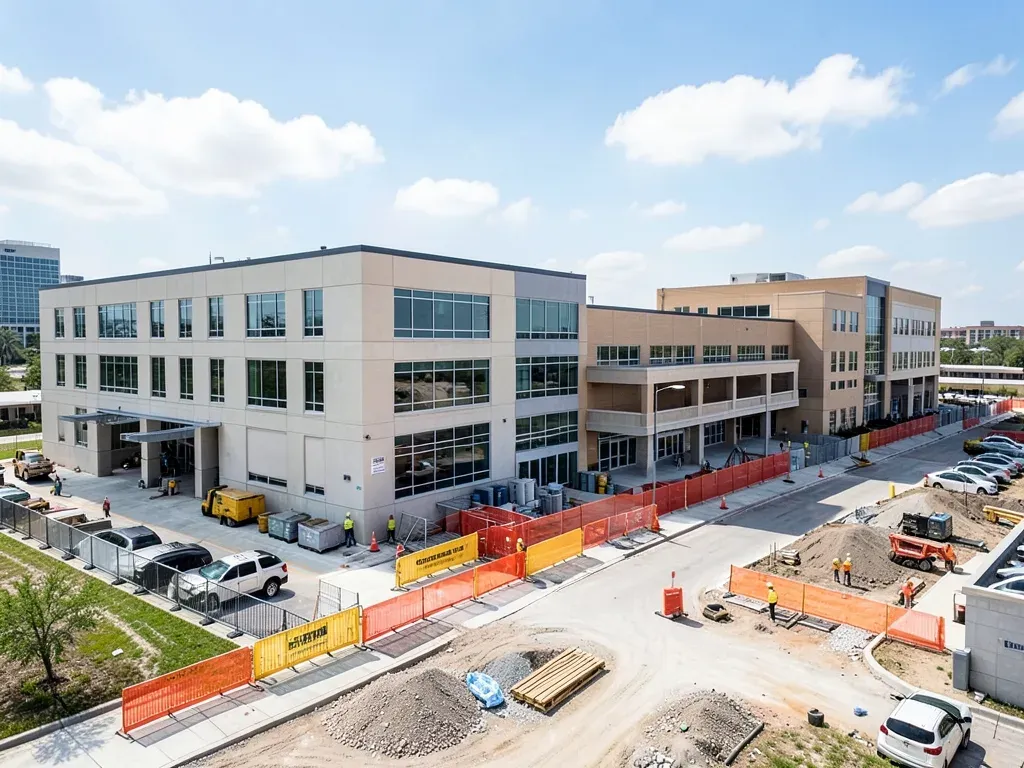
For a developer or owner evaluating a healthcare project now, five planning questions stand out. First, decide whether the project is a standalone facility, an addition, or a replacement and identify the operational constraints that follow. Second, confirm utility and specialty-system requirements before relying on a conceptual schedule. Third, build active-campus interfaces and shutdowns into the phasing plan. Fourth, identify long-lead equipment and testing dependencies before procurement dates become urgent. Fifth, define turnover as a sequence of readiness activities rather than a single construction-complete date.
The September Encompass announcements are timely signals of continuing investment in Montgomery County, while the Katy expansion and Harris Health milestone show other forms of capacity delivery already underway in the broader region. The practical lesson is not to copy another project’s format. It is to choose the delivery strategy that fits the facility’s operating model, then make phasing, systems coordination, and turnover visible early enough to manage them.