
Industry analysis
Conroe Advanced Manufacturing: New Construction Signals
Hertha Metals' Conroe expansion highlights how advanced manufacturing projects can shift early attention toward utilities, process equipment, commissioning, and phased delivery.
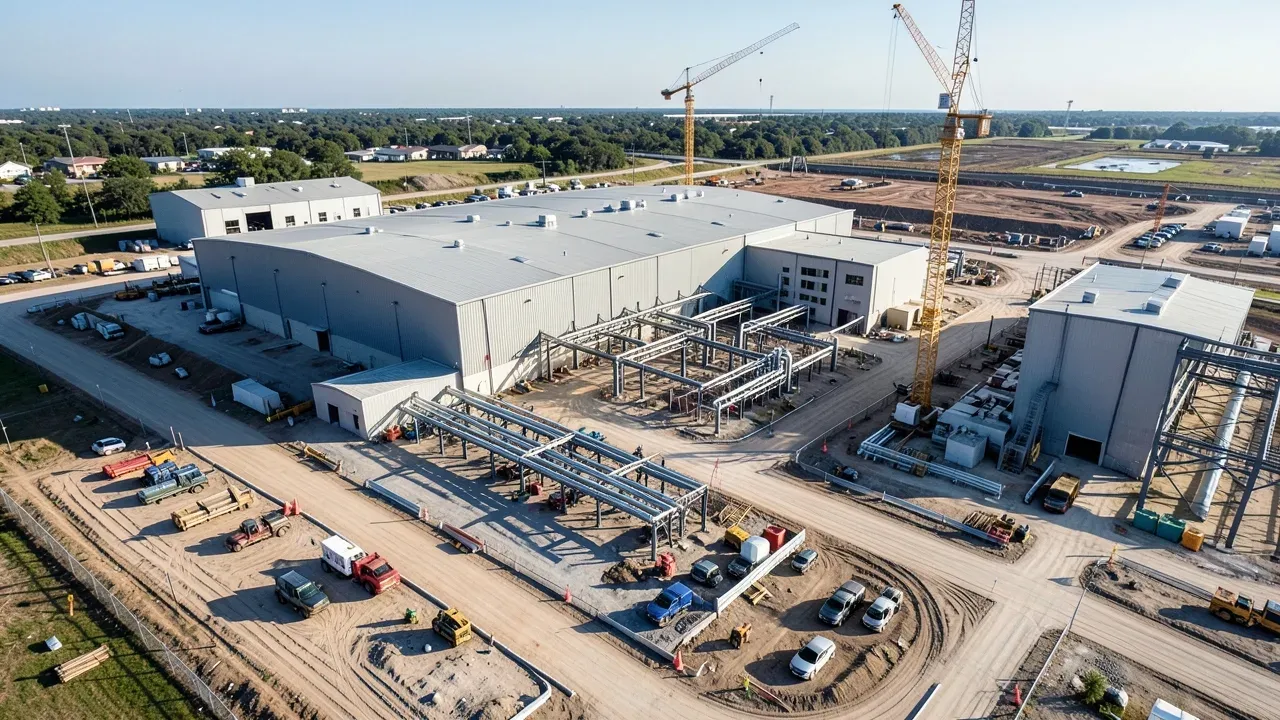
A new round of financing for Conroe-based Hertha Metals is putting another advanced-manufacturing project into Greater Houston’s construction conversation. The Houston Business Journal reported on September 29 that the company closed a $133.65 million Series A financing round that included a $65 million U.S. government equity investment just before groundbreaking on its first commercial high-purity iron plant. The Houston Chronicle reported on September 30 that financing will support construction of Hertha Chalyx near the company’s existing pilot facility on FM 3083 and that construction is expected to begin in 2026.
Earlier reporting on September 4 described the planned Conroe plant as a roughly $100 million facility. The September 30 Chronicle report says the new operation is planned to produce 10,000 tons of steel-grade and magnet-grade high-purity iron. Those are reported project facts, not Adila Construction projects or forecasts.
For Greater Houston owners and developers, the useful signal is broader than one plant. Moving a process technology from pilot scale toward commercial production changes what must be resolved before vertical construction is the dominant concern. Utility capacity, process-equipment interfaces, foundations, ventilation, material handling, long-lead procurement, controls, startup, and commissioning can shape the project earlier than they do on a conventional shell building. The analysis below explains those owner-side implications without assuming Hertha’s exact design, contractor, cost allocation, or schedule.
Pilot-to-commercial scale changes the construction problem
The Conroe Economic Development Council profiled Hertha’s local pilot operation in August 2025, describing the company’s work to scale a new iron-production process. The September 2026 reporting shows the next step moving toward a commercial facility near that pilot site.
That transition matters because scale-up is not simply a larger version of the same building. A pilot facility can prove equipment, chemistry, controls, and operating sequences at one throughput, while a commercial plant may require a different arrangement of production lines, larger material flows, more utility demand, more robust maintenance access, and a longer chain of supporting systems.
For an owner, the early design question is therefore not only “How large is the building?” It is “What must the process do, and what building and site systems are required to make that process reliable?” Process layouts should inform structural grids, clear heights, equipment foundations, overhead routing, crane or lifting access, loading areas, ventilation, drainage, fire protection, and service access before the architectural package becomes difficult to change.
This is a different planning emphasis from a speculative industrial shell. The building is still important, but its geometry may be driven by production rather than the other way around. That makes early coordination between process engineering, civil, structural, MEP, controls, equipment vendors, and construction planning especially valuable.
Utility capacity can become a front-end design gate
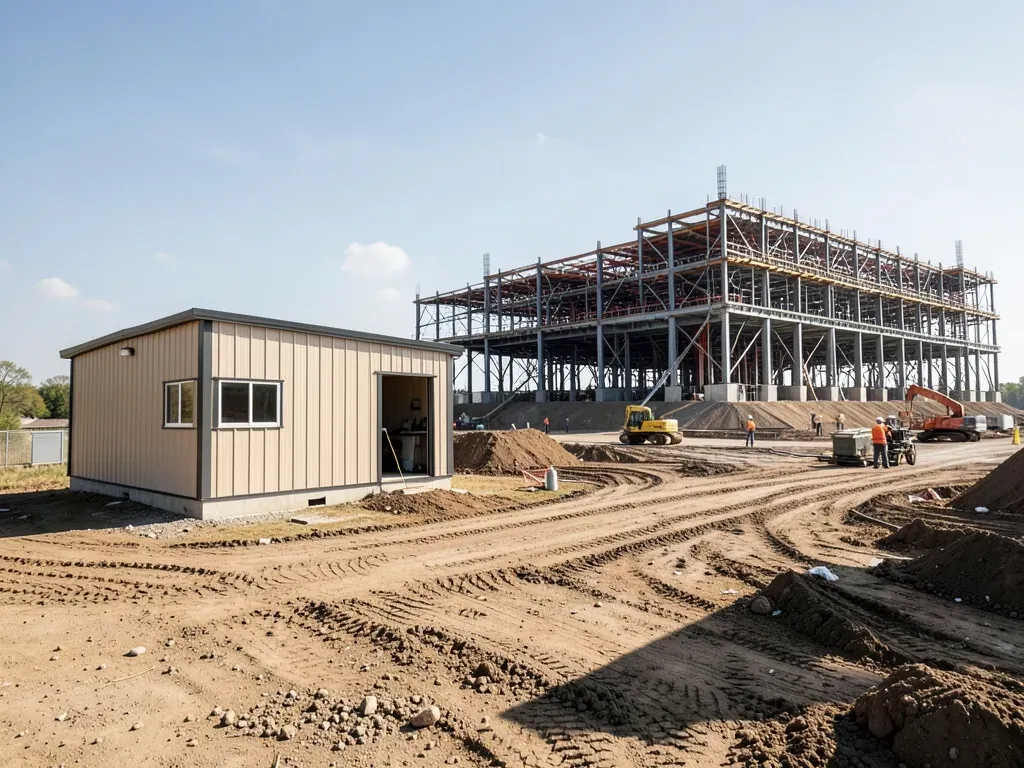
The 2025 Conroe EDC profile describes local coordination around Hertha’s pilot and growth plans. The September 2026 reports do not publish a complete utility schedule for the new commercial facility, so owners should not infer the plant’s exact electric, gas, water, cooling, or wastewater requirements from public coverage.
The owner-side lesson is that advanced manufacturing projects should verify those requirements early. A site can be attractive from a land and access standpoint while still requiring utility upgrades, new service equipment, off-site work, or long coordination periods before the process can operate at the planned load.
A useful feasibility package defines normal and peak demand, voltage and redundancy needs, process-water quality and quantity, cooling loads, gas or other fuels, compressed air, discharge conditions, backup-power requirements, and any specialty utility. That information allows utility providers and design teams to test the site against real operating needs rather than square-foot assumptions.
The schedule should then separate building work from utility milestones. Service applications, utility studies, easements, equipment procurement, off-site extensions, energization, and final tie-ins may follow different paths. If one utility is critical to equipment startup, its ready date should be treated as a commissioning constraint, not just a civil or electrical task.
For Greater Houston developers considering manufacturing projects, this is a useful diligence habit even when the production technology is very different from Hertha’s. Utility readiness is a site-development question and an operating-readiness question at the same time.
Process equipment should drive coordination earlier than finishes
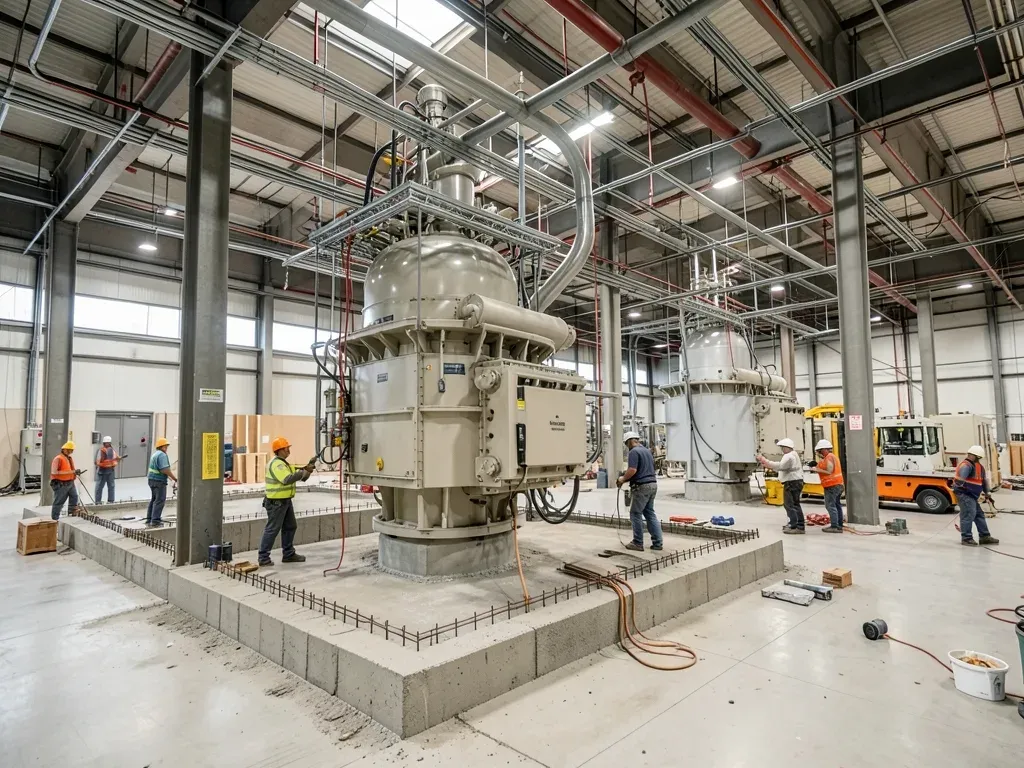
Advanced manufacturing buildings can be dominated by equipment interfaces. Major machines or vessels may need special foundations, pits, housekeeping pads, embedded plates, structural support, overhead clearances, utility drops, exhaust, controls, fire protection, and maintenance zones. Moving any of those requirements late can create rework across several disciplines.
The September reports emphasize Hertha’s move toward a commercial high-purity iron operation. They do not disclose the final equipment list or plant layout. The relevant construction analysis is therefore about process-driven projects generally: freeze the interfaces that affect concrete, steel, utilities, and access before less critical finish decisions consume design attention.
Owners can organize this through an equipment-interface matrix. For each major package, track vendor data due dates, weights, dimensions, anchor requirements, electrical characteristics, heat rejection, ventilation, utility connections, control points, delivery path, rigging needs, startup prerequisites, and maintenance clearances.
That matrix should connect directly to submittal and procurement schedules. If structural design needs a vendor load before foundations can be released, the vendor data date becomes a design milestone. If a large machine must enter before a wall or roof section closes, delivery becomes a building-sequencing milestone. The value is not paperwork; it is exposing dependencies while the project still has options.
Procurement and construction need a shared long-lead plan
A financing announcement can create momentum, but capital availability does not eliminate lead-time risk. Advanced manufacturing projects may depend on custom process equipment, electrical gear, controls, specialty valves, air-handling systems, pollution-control equipment, transformers, or other components whose engineering and fabrication begin well before installation.
Owners should distinguish three dates for critical packages: when the design must be sufficiently defined to release the order, when vendor information must be returned for coordination, and when the equipment must arrive to protect the field sequence. Those dates can be months apart.
The September 29 Business Journal report places Hertha’s financing immediately ahead of groundbreaking. That timing is a reminder that commercial, design, and construction workstreams can overlap. For another Greater Houston manufacturing owner, the practical response is to establish procurement authority and decision thresholds early. Who can release a package before the full design set is complete? What design risk is acceptable at release? Which alternates have been technically evaluated? How will vendor changes be incorporated into the model and drawings?
A shared long-lead register also helps the owner distinguish true critical items from general market anxiety. The team should record the current quoted lead time, required-on-site date, float, approval status, fabrication milestones, logistics constraints, and contingency. That creates a basis for action rather than relying on broad statements that “everything is long lead.”
Commissioning should be designed, not added at the end
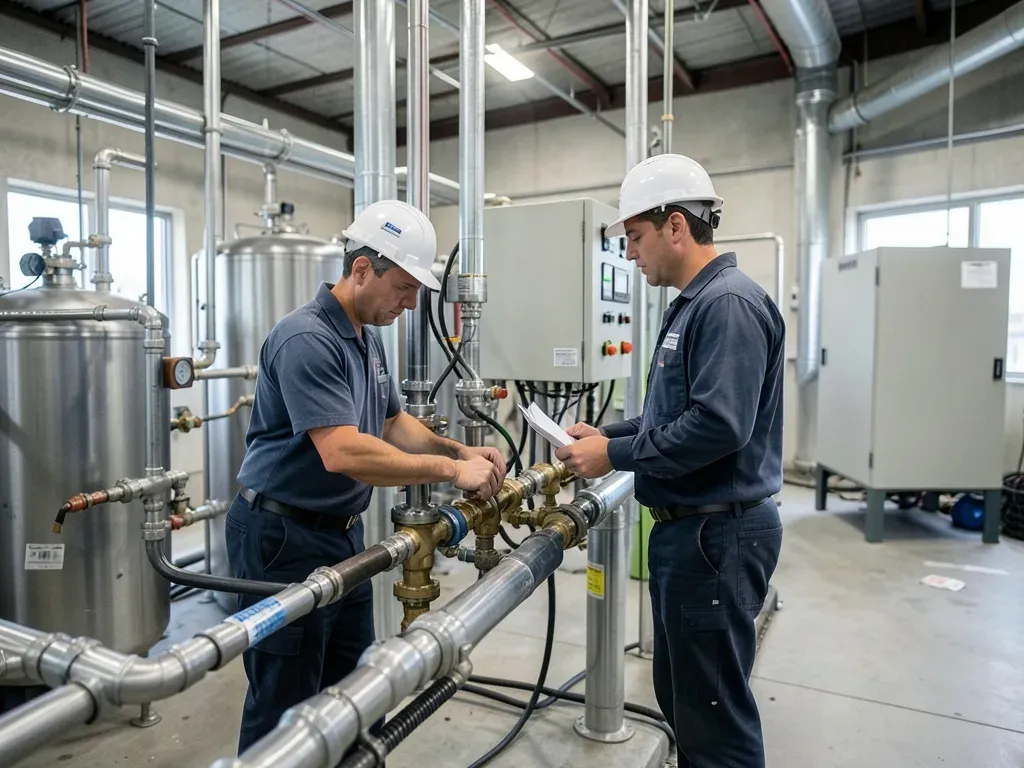
A process plant is not operational simply because the building envelope and equipment installation are complete. Startup may require cleaning, flushing, pressure testing, electrical checks, instrument calibration, controls integration, safety-system verification, dry runs, utility balancing, vendor support, operator training, and progressive production trials.
That means commissioning logic should influence design and schedule well before turnover. The project team needs test points, isolation points, access, temporary utilities where required, and a sequence that allows systems to be proven safely. If one system cannot be tested until several others are complete, that dependency belongs in the baseline schedule.
Owners can improve readiness by defining systems and subsystems early. Instead of one milestone labeled “commissioning,” establish boundaries for utilities, building systems, process areas, controls, and production equipment. Assign responsibility for test procedures, acceptance criteria, deficiencies, documentation, and retesting.
This also changes the meaning of substantial physical progress. A manufacturing project can look nearly finished while still carrying substantial startup risk. For capital planning, staffing, customer commitments, and operating forecasts, owners should distinguish construction completion from systems completion and production readiness.
Greater Houston owners should read the signal carefully
Hertha’s Conroe investment is a specific project, not proof that every advanced-manufacturing proposal in the region will advance on the same economics or schedule. The public reports establish that the company secured a major financing round, that government investment is part of that round, that a commercial high-purity iron facility is planned near its existing pilot operation, and that construction was expected to begin in 2026. They do not establish a regional construction-cost benchmark or a universal delivery model.
The useful signal for owners is about project structure. Manufacturing developments tied to specialized production technology can push technical diligence earlier. Land acquisition and building area remain important, but feasibility may depend just as much on utilities, process interfaces, specialty equipment, environmental and life-safety requirements, procurement timing, and a credible startup sequence.
For a Greater Houston owner evaluating a process-manufacturing project, five questions are worth answering before the schedule hardens. First, what site and building decisions depend on process data that is not yet final? Second, which utility capacities and connection dates must be independently verified? Third, which equipment packages control foundations, structure, or building closure? Fourth, which long-lead decisions need owner authority before the full design is complete? Fifth, what must be tested and proven before the facility is truly ready to operate?
The Conroe news is timely because it shows a local pilot-to-commercial transition moving closer to construction. The practical lesson is not to copy that plant. It is to organize any advanced-manufacturing project around the operating process early enough that the building, utilities, procurement plan, and commissioning strategy can support it.