
Construction guide
Houston Building Commissioning Planning Guide
A practical Greater Houston owner guide to defining commissioning goals, coordinating testing, resolving issues, and turning building systems over with usable records.
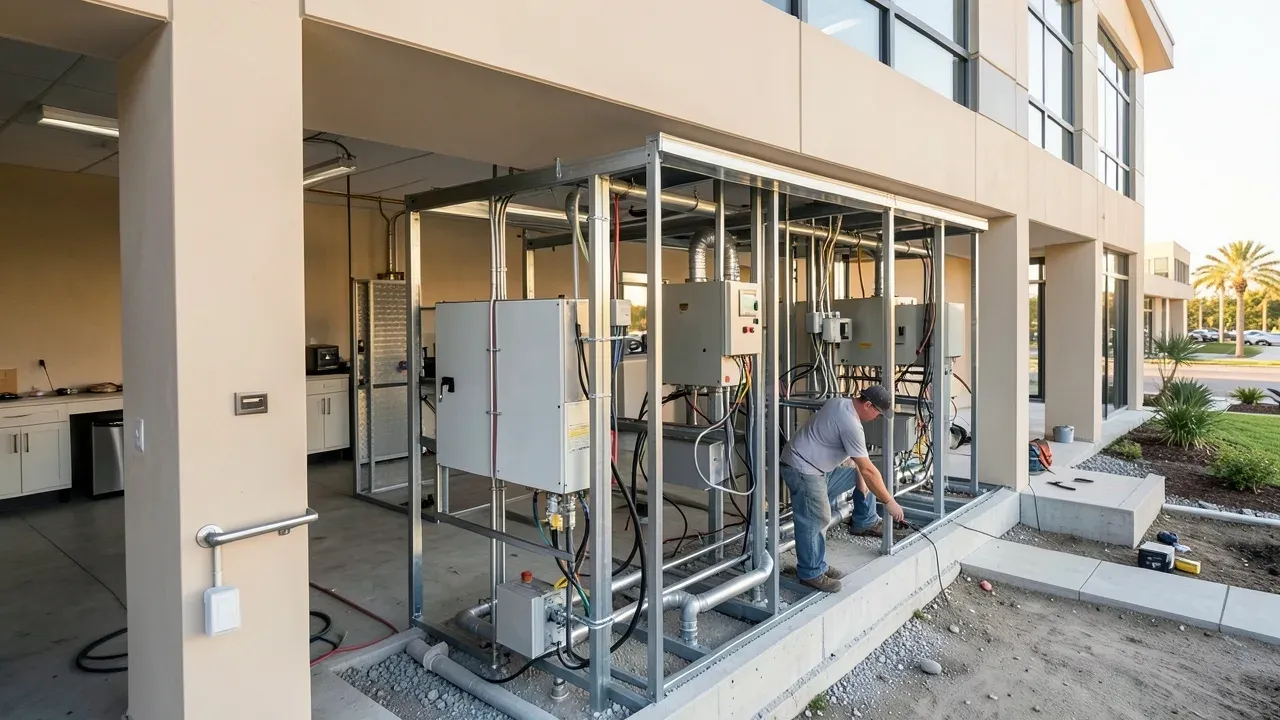
Commissioning is often misunderstood as a final test performed just before a building opens. For owners, that framing is too narrow. A useful commissioning process starts much earlier: the owner defines what the building and its systems are expected to do, the design team translates those expectations into documents, contractors install and start the systems, and the project team verifies that the finished result can be operated as intended.
The U.S. Department of Energy describes building commissioning as a way to improve building operations and reduce the risks associated with poor building performance. DOE’s Federal Energy Management Program also treats commissioning as part of implementation, construction, and project acceptance rather than as a stand-alone ceremony at the end. Those are broad industry principles. The steps below apply them to the practical decisions Greater Houston owners and developers make during commercial, multifamily, institutional, and major renovation projects.
Define what success means before equipment arrives
The owner should begin by documenting the conditions that matter after occupancy. That document does not need to be overloaded with engineering language. It should identify the intended operating hours, critical spaces, temperature and humidity expectations where relevant, ventilation needs, emergency modes, backup-power priorities, controls responsibilities, metering needs, and any operational constraints that could affect testing.
This baseline is commonly expressed through owner project requirements. Its value is simple: a commissioning team cannot verify success if the team has never agreed on what success means. If the owner expects a tenant area to maintain one operating schedule while the controls sequence assumes another, the conflict is easier to resolve in design than after move-in.
The owner should also decide which systems will be commissioned. HVAC and controls are common candidates, but the scope can also include lighting controls, domestic water, emergency power, fire and life-safety interfaces, building envelope elements, specialty equipment, and systems that depend on several trades working together. The right scope depends on the building and its risks.
For Greater Houston projects, the owner should be especially careful with systems that must begin sustained operation quickly after construction. A building can look complete while controls, sensors, balancing, sequences, and alarms are still being tuned. Commissioning gives those less-visible conditions a defined path to acceptance.

Connect commissioning to submittals, startup, and the schedule
Commissioning should not run on a separate calendar from construction. Functional testing depends on earlier work being complete: equipment must be installed, powered, started, programmed, balanced where applicable, and connected to the systems it needs to interact with. If those prerequisites are not tied to the master schedule, commissioning can become a compressed end-of-project exercise.
Owners can reduce that risk by identifying commissioning milestones in the baseline schedule. Examples include controls point-to-point checks, equipment startup, testing and balancing, life-safety interface testing, trend-data collection, seasonal or deferred tests, operator training, and final issue verification. The schedule should also show which activities can occur by floor, zone, building, or system rather than waiting for the entire project.
Submittal review is another important connection. Commissioning is more effective when the team can compare proposed equipment, controls sequences, and access requirements with the owner’s performance expectations before installation. A late discovery that a sensor is inaccessible, a control point is missing, or an equipment option does not support the intended sequence can be expensive to correct after finishes are complete.
The DOE commissioning resources emphasize a methodical process and defined responsibilities. For an owner, that means the commissioning provider should not become the only person who knows what is unresolved. Contractors, designers, facility staff, and the owner team should all understand who starts equipment, who witnesses tests, who corrects deficiencies, who retests, and who accepts the final result.
Treat functional testing as proof of sequence, not a checklist
A startup confirms that equipment can run. Functional performance testing asks whether the system behaves correctly under the conditions the owner cares about. That distinction matters.
For example, an air-handling unit may start successfully but still fail to respond properly when occupancy changes, an alarm occurs, a sensor drifts, or another system commands a different mode. A generator may run but the owner also needs confidence that transfer logic, priority loads, alarms, and recovery operate as intended. A pumping system may move water but still require verification of staging, safeties, controls, and failure responses.
Useful test scripts should therefore describe conditions, expected responses, and evidence. The goal is not to create paperwork for its own sake. The goal is to make the result repeatable and understandable. Where possible, testing should use normal controls and operating interfaces rather than temporary workarounds that will disappear after turnover.
The owner should also decide how failed tests are handled. A failed step does not automatically mean the entire project stops, but the issue should be recorded, assigned, corrected, and retested. If a workaround is accepted temporarily, the owner should know what remains open and what condition triggers final acceptance.

Keep an issues log that supports decisions
A commissioning issues log is most useful when it separates facts from decisions. The factual record should describe the observed condition, the affected system, the test or review that identified it, and the responsible party. The decision record should state whether the issue will be corrected, deferred, accepted with a documented limitation, or resolved through another design or construction change.
Owners should resist allowing the log to become a list of vague comments such as “controls not working.” A specific entry is easier to close: which equipment, which sequence, what happened, what should have happened, and what evidence will show that the correction works.
Priority also matters. Some issues affect comfort but not occupancy. Others can affect life safety, critical operations, equipment protection, utility use, or the ability to train staff. Ranking issues by operational consequence helps the team focus limited time before turnover.
The commissioning log should coordinate with the project’s broader change-management and closeout processes without becoming the same document. A commissioning issue may reveal a construction deficiency, a design clarification, a programming correction, or an operations question. The owner benefits when the team can trace that issue into the system where the final action is actually managed.
Plan training and turnover around real operating tasks
Operator training should be more than a manufacturer presentation. Facility staff need to understand how the installed system is intended to operate, how to use the controls interface, what normal alarms mean, what maintenance access is required, and what to do when the system is placed in an unusual mode.
Training is more effective after the major commissioning issues are resolved. Otherwise, operators may be taught temporary conditions that will change before occupancy. The owner should also decide what must be recorded or documented for future staff who were not present during the original sessions.
Turnover documents should be usable, not merely complete. Equipment data, approved submittals, sequences of operation, test reports, balancing reports, warranties, controls backups, setpoints, trend configurations, and final issue status should be organized so the facility team can find what it needs later.
DOE’s monitoring-based commissioning guidance reinforces the idea that responsibilities and plans should remain visible after initial acceptance. For some properties, trend data and analytics can continue to identify drift after occupancy. Even when ongoing commissioning is outside the project scope, owners can preserve the value of initial commissioning by keeping points, sequences, baselines, and test records accessible.
Use deferred testing deliberately
Not every system can be tested under every condition before opening. Weather-dependent tests, full-load conditions, tenant schedules, or seasonal modes may require later verification. Deferred testing is reasonable when it is planned; it becomes risky when it is simply forgotten.
The owner should maintain a deferred-test register with the reason for delay, the required condition, the responsible party, the expected test window, and any contract or warranty implications. The same register should identify whether access, controls support, or temporary instrumentation will be needed later.
This is especially important when the people who built the project begin demobilizing. A test that depends on a controls programmer, specialty subcontractor, engineer, and facility operator can be difficult to reassemble months later unless responsibility and timing were established before final payment.
Give commissioning a clear owner decision structure
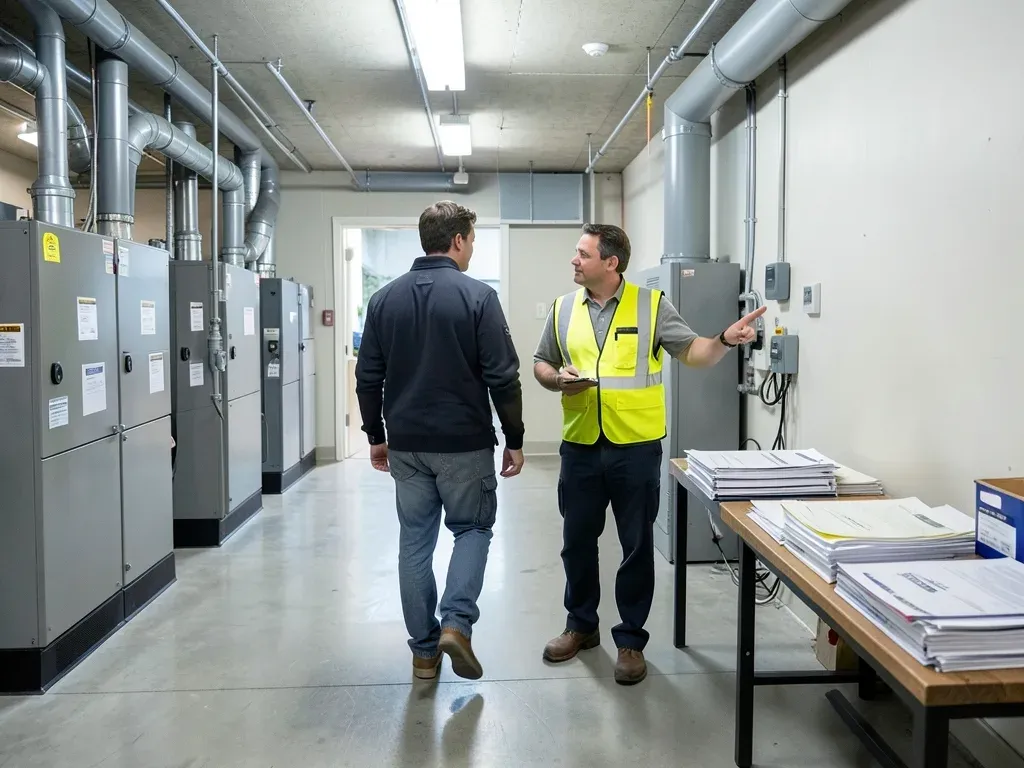
Owners do not need to direct the technical details of every test. They do need a clear structure for decisions. Before construction reaches its final stages, the owner should know:
- which systems and interfaces are in the commissioning scope;
- which owner requirements are being verified;
- who writes and approves test procedures;
- what prerequisites must be complete before each test;
- how deficiencies are recorded, prioritized, corrected, and retested;
- what issues can remain open at substantial completion;
- which training and turnover records are required;
- which tests are deferred and when they will occur; and
- who has authority to accept the final commissioning report.
That structure helps prevent a common project problem: a building that is physically complete but operationally uncertain. Commissioning does not replace good design, quality construction, inspections, or closeout. It connects those activities through documented verification.
For Greater Houston owners, the practical value is control. A well-planned process gives the owner better visibility into how building systems were intended to work, what was actually tested, what remains unresolved, and what information the operations team receives when the construction team leaves.